Post By: Claudine Aitcheson | Founder, Flourishing Through Menopause | Healthcare Administrator | Surgical Menopause Advocate, June 17, 2025
Today, I find myself cherishing every moment. I’ve come to understand that health, life, and time are precious gifts.
They are fragile and fleeting, and never to be taken for granted. That realization has been humbling, and I carry it with me every single day.
After my surgery, the doctor told me to “watch for mood swings.” I remember thinking, what does that even mean? What am I supposed to do if I experience them? But I didn’t ask.
I was still floating in what I like to call “mind blur”, my own made-up term for that hazy, post-anesthesia fog where nothing quite makes sense, and everything feels like a dream narrated by confusion.
It was such a vague and unsettling piece of advice to be handed right after something so life-altering.
But I suppose in the whirlwind of pre-op prep and post-op recovery, no one really had the time, or maybe even the right words, to explain the emotional and psychological side of the journey I was about to begin.
Looking back, I realized the mood swings were only one part of a much bigger picture. And while I wish someone had explained more, I now understand that some lessons can only be fully grasped by living them.
Although my menstrual cycle had ended a few years earlier, it wasn’t until my first day home from surgery that I truly felt menopause take hold. This wasn’t just a gradual transition.
It was a full-body upheaval, a transformation that left me grappling with sensations I had never experienced so intensely before. The hot flashes struck with unrelenting force, like a volcano erupting from deep within me.
One moment, I was fine; the next, an inferno spread through my body, as if I had been set ablaze from the inside out.
It wasn’t just warmth, it was an explosion of heat that left me gasping, desperate for relief.
And then came the night sweats. Sleep became a battleground, a restless cycle of waking up drenched, my sheets and pajamas soaked through as if I had walked through a torrential downpour.
It wasn’t just once or twice, I was jolted awake three, sometimes four or more times a night.
The chill of damp fabric clinging to my skin as my body swung wildly between overheating and shivering was… well, annoying, for lack of a better word. The truth is, it was exhausting, unsettling, and relentless, but mostly, just plain annoying.
This was menopause in its rawest form, an initiation into a new reality, one that demanded strength, resilience, and a whole new way of navigating my own body.
But it wasn’t just the hot flashes or the sweating that kept me awake. I found myself waking up repeatedly, not only because of the physical discomfort but also because of the constant urge to urinate.
It felt like my body was at war with itself, and sleep was a distant memory. Through this experience, I came to realize something profound: there’s no way for a menopausal woman to escape the stress, anxiety, agitation, and overwhelming emotions that often comes with it.
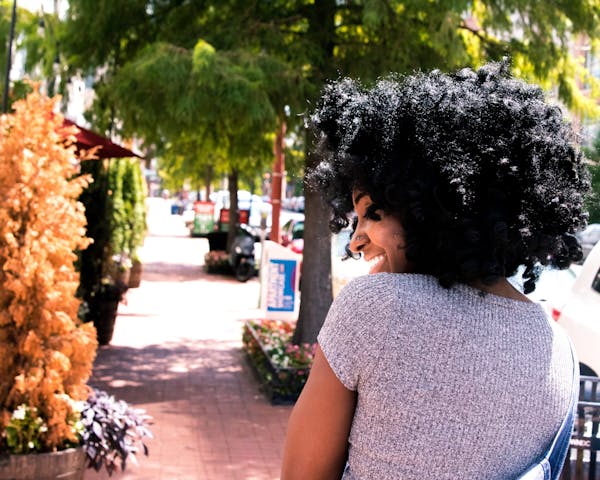

The sleepless nights, marked by hot flashes, sweat-soaked sheets, and constant trips to the bathroom, took a toll I never could’ve imagined.
Menopause steals sleep. It just does. And when sleep goes, so does your patience, your clarity, your emotional resilience. Basically, your sanity.
At my follow-up appointment, my doctor brought up hormone replacement therapy (HRT). But in my confusion and fear, I blurted out a firm “no.”
I had heard whispers that hormone replacement therapy (HRT) could cause cancer, and that was enough to terrify me. Without missing a beat, the doctor simply replied, “Okay.” And that was it.
No further explanation, no discussion of the potential benefits, no breakdown of risks, just an “okay” and a quiet dismissal of the moment.
But I wasn’t too worried at the time. Superwoman to the rescue!
I still felt strong; my estrogen hadn’t dropped too low, yet I suppose, so I thought I could power through.
I also reminded myself, after all, women have been going through this transition forever without medication, right? So, how hard can it be?
Bring it on! I thought, completely oblivious to the challenges that lie ahead.
Now, looking back, I wish I had known more and asked more. I wish someone had walked me through the decision instead of leaving me alone with it.
Choosing hormone replacement therapy (HRT) or not is a very personal and complex decision.
This decision shouldn’t be made in a fog of anesthesia, fear or misinformation.

At the beginning of my surgical menopause journey, I thought I could manage everything on my own. I stocked up on a few over-the-counter vitamins that promised menopause support and figured I’d be fine.
I wasn’t.
Reality hit hard, and fast. The supplements didn’t help much, and I was suddenly thrown into a whirlwind of symptoms I didn’t fully understand.
So, I turned to simple, sometimes quirky, solutions that surprisingly worked better than I expected.
One of my early lifesavers was frozen grapes. Yes, I said it, frozen grapes. I always kept a few bags in the freezer. Whenever the volcano inside me threatened to erupt with a hot flash, I’d grab one or two.
That quick burst of icy sweetness didn’t just cool me down physically; it gave me a sense of control in the chaos. If you enjoy grapes, I highly recommend this small trick. It’s simple, refreshing, and just might make you feel human again in the middle of a sweat storm.
To fight the heat, I kept my air conditioner on full blast. The chill was so extreme that my husband would joke that we were just one penguin away from an arctic adventure. It wasn’t glamorous, but it worked.
Then there were the tank tops, so many tank tops. I layered them under soft cotton pajama shirts to absorb the night sweats and ease the discomfort of waking up damp and clammy.
And the underwear? Let’s just say I lost count of how many times I changed them through the night. Sweat is not selective, everything gets wet.
I always kept small towels and washcloths within arm’s reach, tucked in drawers, bags, and beside the bed. And I never left the house without a frozen bottle of water. It’s amazing how these tiny habits became essential survival tools.
Menopause humbled me, but it also taught me the power of paying attention to what my body needed, even if that meant stocking up on grapes, tank tops, and a sense of humor. Yes, you will laugh at some of the adventures menopause brings.

After my surgery, I knew I needed time, not just to recover physically, but to process everything I had been through.
So, I took a break from work, allowing myself the space to heal. Six months later, I returned, hoping to regain a sense of normalcy. But life had other plans.
The world was shifting as COVID-19 spread, bringing fear and uncertainty. Then, another devastating blow...my father was diagnosed with cancer. His passing was one of the hardest moments of my life.
During this time, I was working from home, juggling grief, the isolation of a global pandemic, and the emotional whirlwind of menopause. The weight of it all became too much, and eventually, I made the difficult decision to leave my job.
But stepping away from work didn’t mean stepping away from struggle. Menopause brought a new battle. While the hot flashes eventually subsided, an unsettling agitation took their place.
I became irritable, restless, and most painfully, disconnected from my husband. The man I had loved for years suddenly felt unbearable to be around. Every little thing he did set me off.
I remember when he did the laundry and I lost it because, how dare he do the laundry when I am the only one on the planet who knows how to do it correctly.
It was as if menopause had hijacked my emotions, clouding my ability to see him with love and patience.
The mood swings were relentless. And forget it when he wiped the kitchen floor because (I do not know why) when he knows for sure that I am the only one on the planet who knows how to do it and makes the house smell breezy fresh.
He does the most disturbing things. But the worst is when I am arguing in peace, and he thinks he should walk away to give me time to cool off. Who does that?
One moment, I was overwhelmed with frustration, snapping at him over the smallest things. The next, an intense wave of love and affection would wash over me, filling me with regret and guilt for how I had treated him just hours before.
It was a constant cycle of emotional ups and downs, leaving me exhausted and confused.
So, I guess this is what the doctor meant when she instructed me to “watch out for mood swings.” I had no idea how deeply they would affect not just me, but the relationship I held most dearly.

Through this experience, I came to a sobering realization: even the strongest relationships can be tested by menopause.
Hormonal shifts can alter your emotions, distort your perceptions, and make you question everything, including the people you love.
It reminded me of something I had observed during the pandemic. Viral videos often surfaced of women that looked about my age, angry, irate, seemingly irrational. Women who had been labeled with the infamous term “Karen.” And I can’t help but wonder: how many of them were unknowingly battling the effects of menopause? How many were struggling with the same emotional turbulence that had taken me by surprise?
My advice? Guard your mind and protect your mental well-being. Menopause isn’t just a physical transition. It is a mental and emotional one, too.
The thoughts and feelings you experience during this time may not always reflect reality; they are often the result of shifting hormones. Recognizing this can be the key to reclaiming control. If you’re navigating this storm, know that you’re not alone.
Acknowledge what you’re going through, seek support, and most importantly, show yourself, and those around you, compassion.
This season is challenging, but with awareness, patience, and self-care, we can emerge stronger on the other side of it.
Eventually, I found another job, one that was less stressful and allowed me to work from home. However, the position was temporary and lasted only a year.
As time passed, I started to experience chest pains and found myself becoming more agitated with my husband.
It felt like I was living in a constant state of emotional turmoil, and I acted as if he were my enemy, even though I knew deep down that wasn’t true.
It was as though I was living in a fog of doom and gloom that I couldn’t shake.
One day, my youngest sister sent me a TikTok video by Dr. Mary Claire Haver. Now, let me be clear, I’m not endorsing her, but that video was a game-changer.
It resonated with me on such a deep level that, for the first time, a light bulb went off in my mind. Suddenly, everything made sense.
I wasn’t just "feeling off". I was not just going crazy. I was experiencing the profound effects of menopause and hormonal changes.
That moment sparked a deep dive into menopause research, and what I uncovered was eye-opening. Estrogen isn’t just about reproduction! It influences nearly every system in the body.
The effects range from brain function and heart health to bones, skin, hair, nails, vision, hearing, and more. Estrogen is the thread that holds so much together.
Losing estrogen isn’t just a transition; it’s like removing the cornerstone of a building, everything starts to shift, and you can feel the effects in ways you never expected.
As I continued learning, I researched more about hormone replacement therapy (HRT) and its potential to restore balance, especially for those of us who’ve had a hysterectomy (removal of the uterus) and or oophorectomy (removal of both ovaries).
It was a revelation one I deeply wish I had known about sooner. I immediately shared the video with every woman I knew.
For me, it wasn’t just another social media clip, it was the missing piece of the puzzle, the insight that finally connected the dots in my journey through menopause.
Not every woman can or chooses to use HRT. But even for those who can’t, having a clear understanding of what menopause is, and what the loss of estrogen does to the body empowers us to make more informed choices.
It helps us seek out care that addresses the root causes, not just the surface-level symptoms.
As I pieced together this new understanding, something even bigger emerged: menopause isn’t just a biological transition, it’s a shift in perspective.
And what I discovered next completely transformed how I saw myself, my health, and this powerful new chapter of life.
Copyright 2020 All Right Reserved By. Free html Templates